
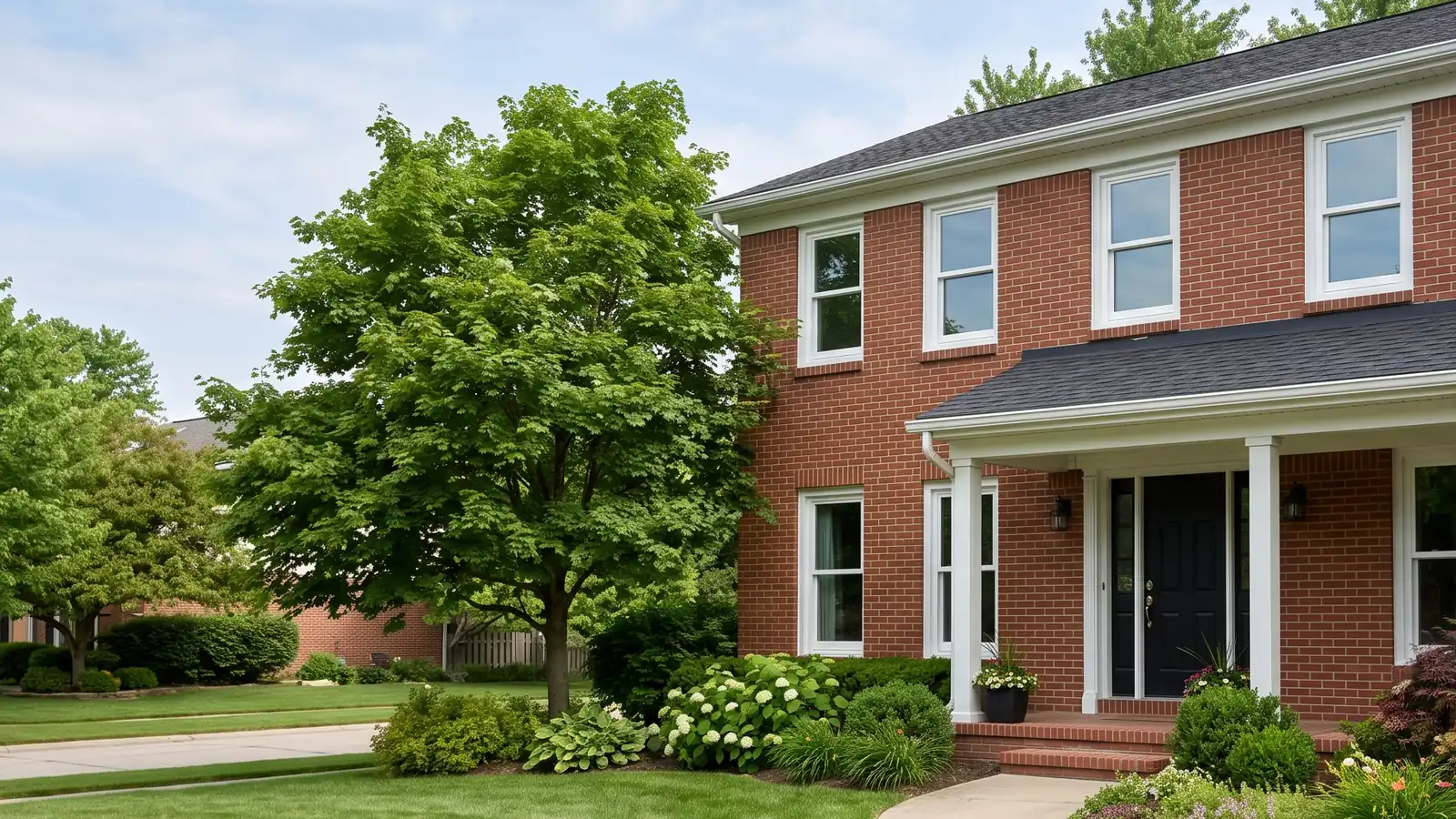
Casement Window Types and Configurations
Every casement shares one trait: the sash swings out on side hinges instead of sliding in a track. What changes is how many sashes there are, how you open them and what they sit next to.
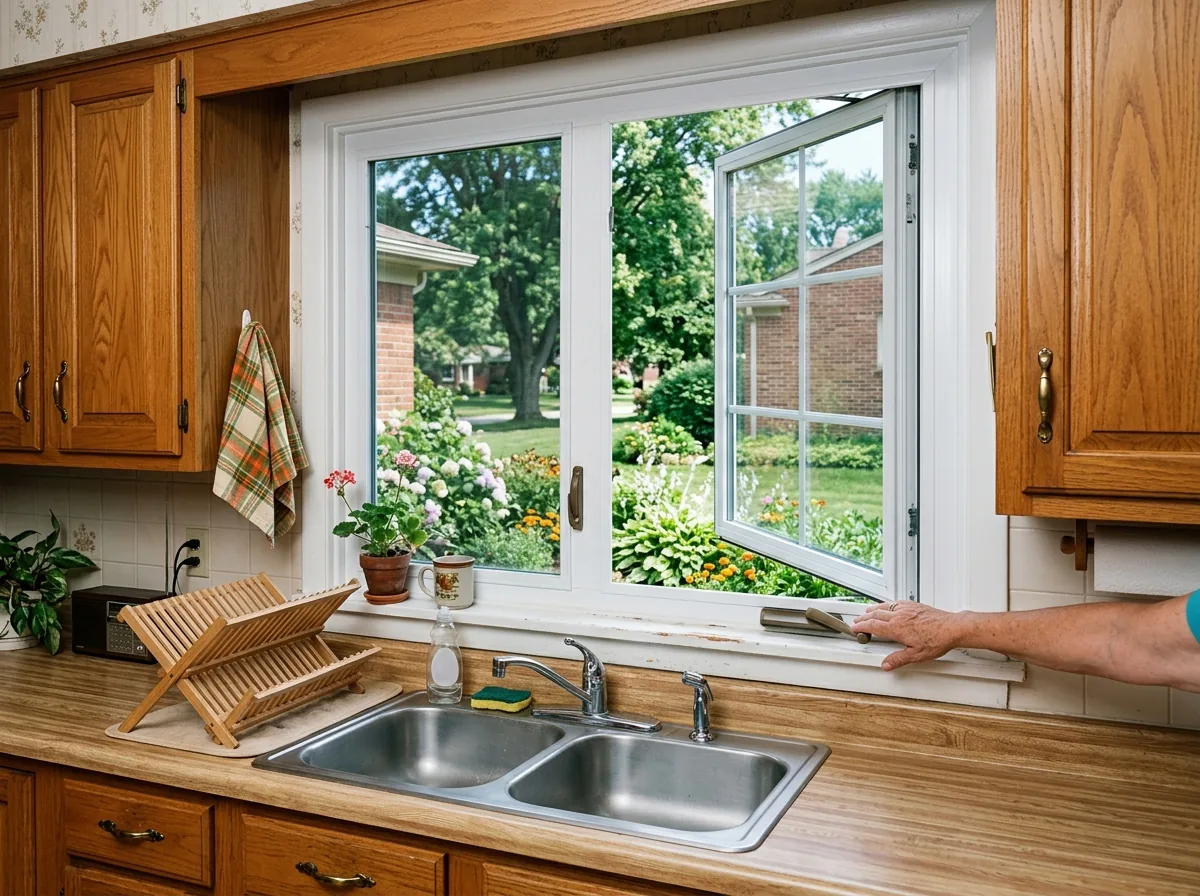
Single Casement Windows
A single casement is one sash, hinged on the left or right. When you close it, the hardware pulls the sash tight into the frame, and one large window maker notes the seal actually tightens when wind blows against it. Casements are tall and narrow, so they fit tight spots, such as the gap between two upper cabinets over a sink.
Pick the hinge side before you order, not after. The open sash should catch the prevailing breeze and stay clear of a deck railing, a downspout or a path where someone could walk into it. If the old window opens the wrong way for the room, replacement is the cheap moment to change it.
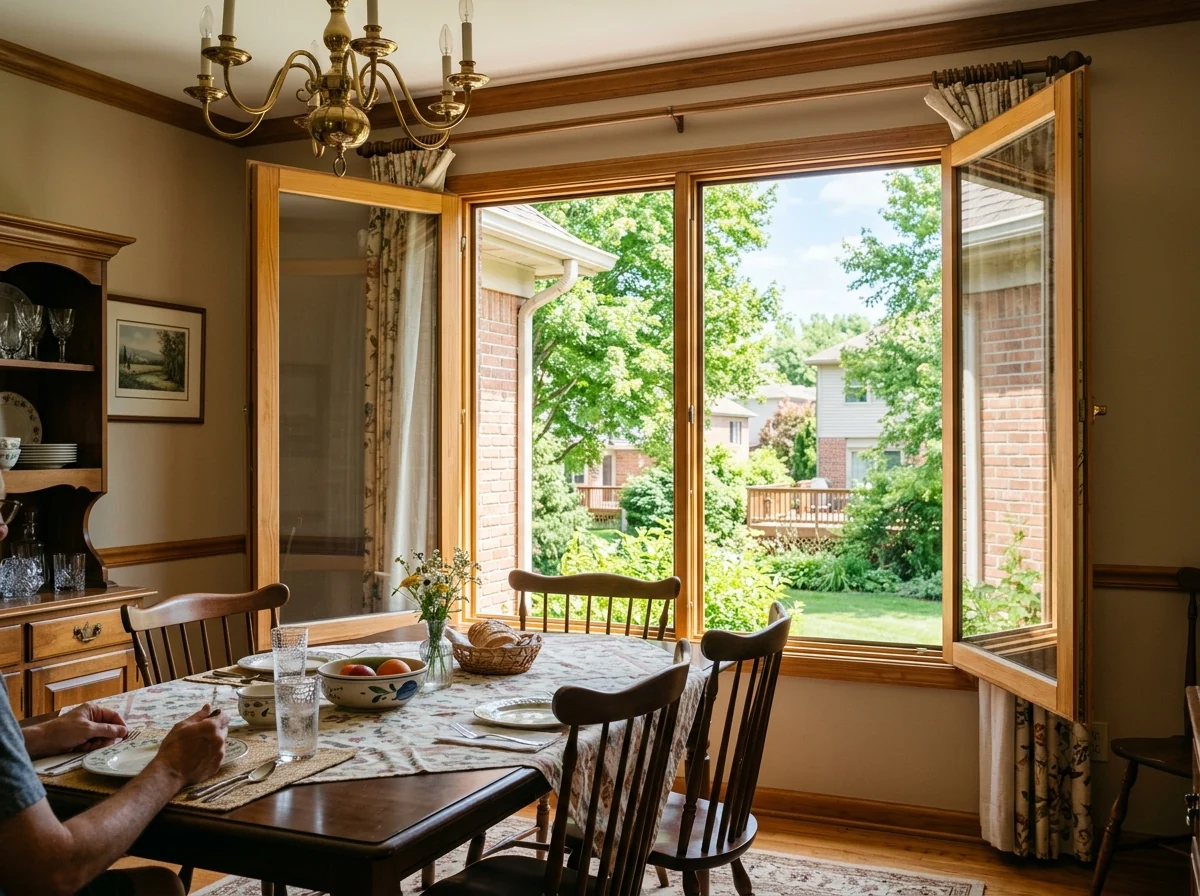
Double and French Casements
A double casement is two sashes in one frame, each hinged on its outer edge. Most pairs have a fixed post (a stile) between the sashes, which narrows the opening. A French casement leaves that post out, so both sashes swing away and the whole opening is clear. That makes French casements popular in living rooms and dining rooms where you want a wide view and a lot of air at once.
Push-Out Casements
A push-out casement drops the crank operator. You turn the handle and push the sash open. They suit a more traditional or modern look with nothing sticking out of the sill, and there are no operator gears to strip. The trade-off is reach: over a deep counter, a crank is easier than leaning out to push. If your current cranks are slipping, a window repair may be enough without new windows.
Casement and Picture Window Combinations
Casements often flank a large fixed pane, giving the room air at both ends and an unbroken view in the middle. The picture windows page covers those units in more detail.
Egress Casements
A casement opens its full sash width, so it reaches the code's clear opening with a smaller frame than a slider or double-hung. Basement bedrooms need the well and the cut wall as well, which is covered under egress window installation.
Why Troy homeowners call Troy Windows
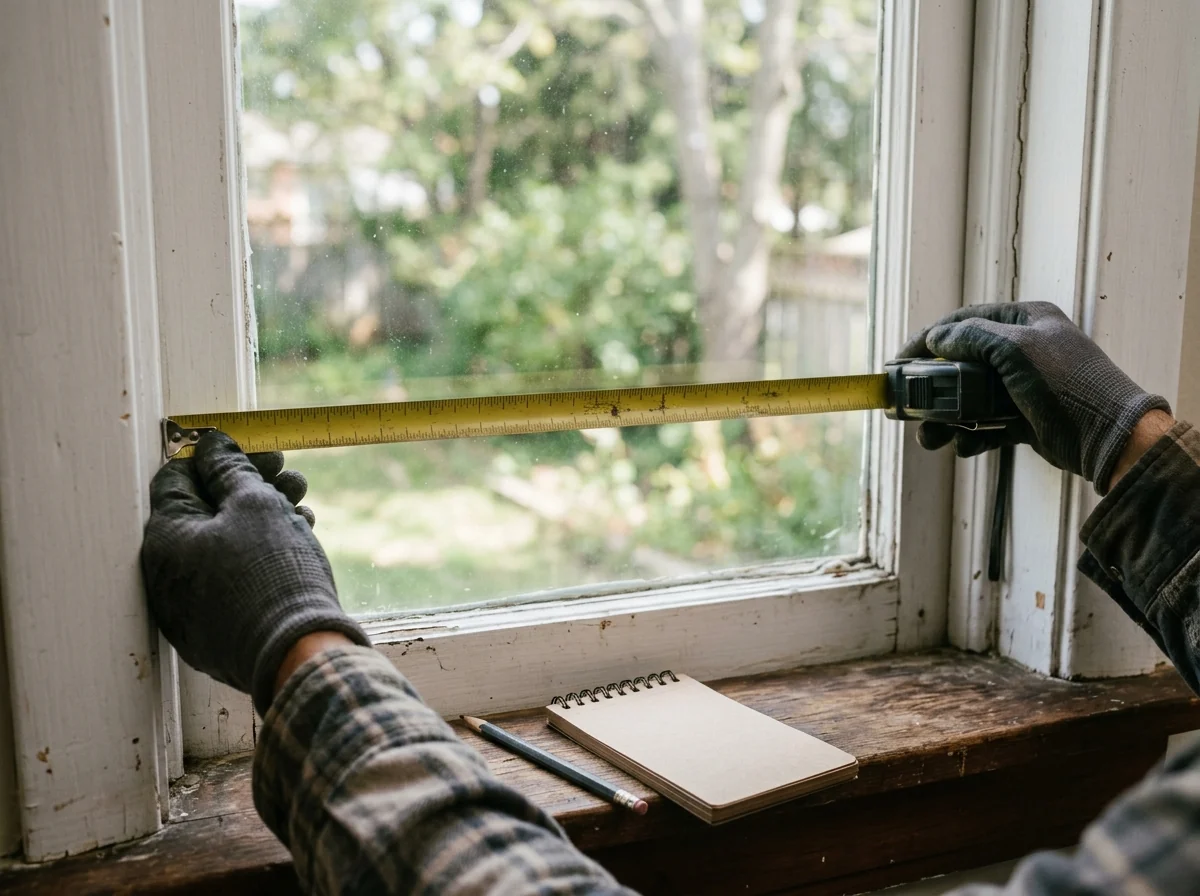
- Free in-home measure of every opening
- Written, itemized quote before any work
- Frames and sills checked before a price
- One local window installer, not a call list
- No charge to homeowners for the referral
Casement Window Cost in Troy
Both cost guides below report national prices, not Troy ones.
| Source | Casement, installed per window | Data year |
|---|---|---|
| HomeGuide | $400 to $3,000 | 2026 |
| Fixr | $400 to $1,200 | 2026 |
For comparison, HomeGuide puts a double-hung at $350 to $2,500, so a casement usually costs a little more for the same opening. The hinge and operator hardware is the reason. Labor is roughly 30% of a window's total in Fixr's breakdown.
Frame material
Vinyl is the cheapest casement frame and wood the dearest; the vinyl, fiberglass and wood pages give each range.Size
Tall casements and French pairs need bigger glass and heavier hinges.Combinations
A picture unit joined between two casements is priced as one assembly, so ask for the combination price as a single line.Older paint
Pulling old sashes in a pre-1978 house adds lead-safe containment; see lead-safe window replacement.
Casement Window Choices for a Troy Home
Upstairs Bedrooms
A bedroom casement has to open from inside without keys or tools, and a crank handles that easily. Upstairs, a low sill can bring in the code's fall-protection rule, and any limiter fitted for it must still release to the full escape opening. The heights are on the double-hung windows page; ask the installer which of your second-floor windows it touches.
Casement or Double-Hung?
A casement opens wider and closes tighter against its weatherstrip. A double-hung keeps the traditional look of a colonial. A split we like: keep double-hungs on the street side and put casements at the back, over the sink and in the family room. See double-hung windows for that style.
Front Windows and Your HOA
Troy's Building Department suggests checking with your homeowners association before window work. Swapping a front double-hung for a casement changes the look of the elevation enough that a committee may want to see it first. On the energy side, compare the NFRC label on each quoted unit; the energy efficient windows page explains the numbers for Troy.