
Soundproof Window Options

Laminated Acoustic Glass
Laminated glass is two panes bonded by a thin plastic interlayer. Ordinary glass has a "coincidence" frequency where it resonates and lets more sound through, and the interlayer damps that resonance. It's often a cost-effective upgrade for sound, and it doesn't matter much whether the laminated pane sits on the inside or the outside of the unit.
You get side benefits too. A laminated pane holds together when it breaks, and it cuts UV that fades floors and furniture. On a bedroom window facing a busy road, laminated glass is where we'd start. One catch for a Michigan winter: the interlayer damps better when it's warm. Industry data from the window makers' association (AAMA) shows STC can drop by up to 5 points and OITC by 3 between glass at 90°F and glass at 60°F, so cold glass is a little less quiet.
Dissimilar-Thickness Glass Units
A standard insulated unit uses two panes of the same thickness, and they share the same resonance. Make one pane thicker and the effect of that resonance drops. In one side-by-side test reported by a window engineer, increasing only the outer pane from 6 mm to 8 mm raised STC by 5 points and OITC by 3. That's a cheap change, and it can be combined with laminated glass on the other side of the unit.
Triple Pane for Sound
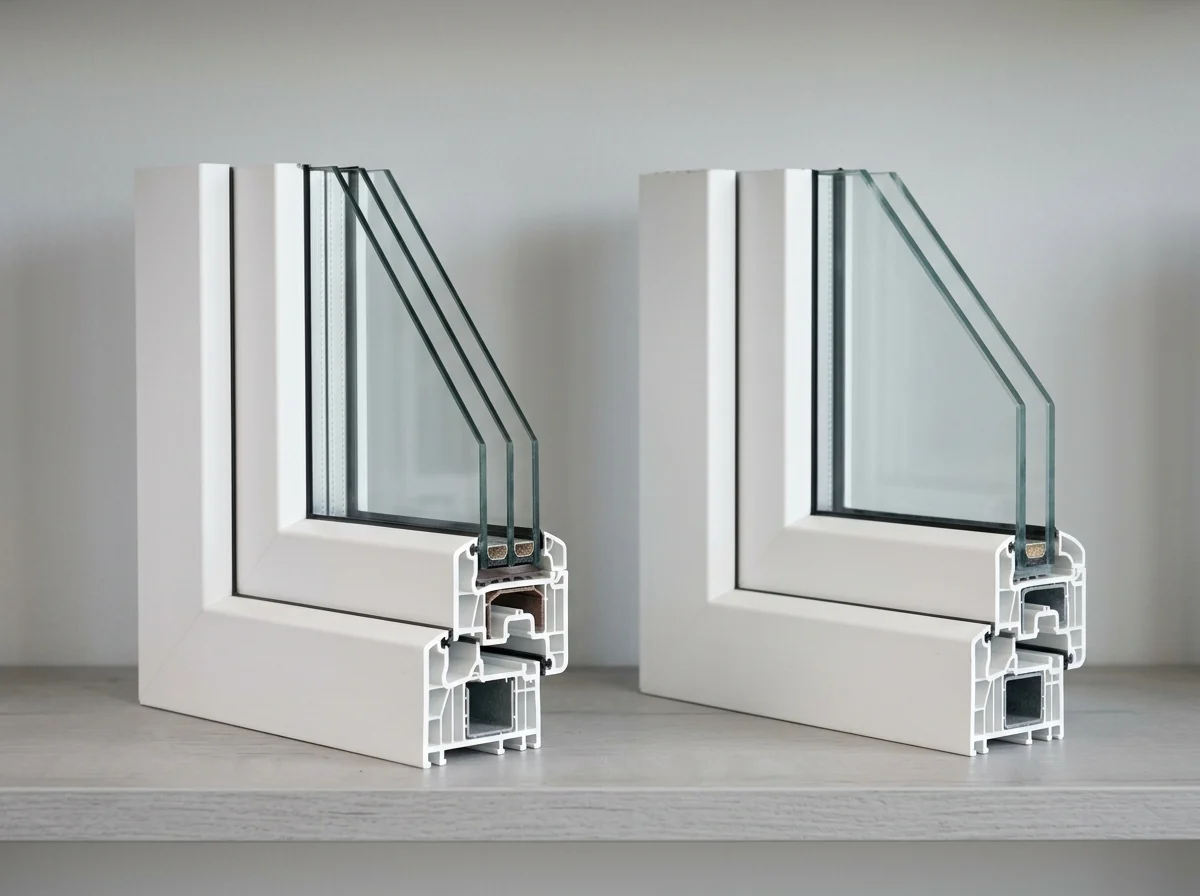
Triple pane is often assumed to be the quiet option, and for heat loss it earns its keep (see triple-pane windows). For sound, the test results are less flattering. At the same overall depth, a 1 1/2-inch triple-pane unit performs about like a 1 1/2-inch double-pane unit, because the extra pane splits the air space. Argon fill doesn't help either: air and argon perform about the same for sound. If noise is the main problem, put the money into laminated glass and unequal panes first.
Interior Acoustic Inserts
An insert is a second glazed panel mounted inside the existing window, leaving a deep air gap between the two. Big gaps work. In National Research Council of Canada tests, adding a storm window with a 76 mm (3-inch) gap to a double-glazed casement raised its OITC from 23 to 30, a clearly noticeable change. Inserts work best when the existing window is airtight and you don't need to open it often. They suit a window in good shape that simply lets in too much noise, and they leave the outside of the house untouched. Exterior storm panels do the same job from outside; see storm windows.
STC and OITC Ratings
STC (Sound Transmission Class) was designed for interior walls and typical indoor noise. OITC (Outdoor-Indoor Transmission Class, ASTM E1332) was built for outdoor noise and is mostly a measure of low frequencies, the rumble that dominates traffic noise. For windows facing a road, OITC is the better guide. You can't convert one to the other.
Read ratings with some caution. Differences under about 3 points are barely audible. Above about STC 48, gains get very expensive. And many glass makers publish glass-only numbers, which run higher than the same glass in a framed window. Ask for the whole-window rating.
Why Troy homeowners call Troy Windows
- Free in-home measure of every opening
- Written, itemized quote before any work
- Frames and sills checked before a price
- One local window installer, not a call list
- No charge to homeowners for the referral
Soundproof Window Cost
National figures from HomeGuide's soundproof window guide (February 2026):
| Option | National cost per window |
|---|---|
| Complete soundproof window (new frame and glass) | $550 to $2,000 installed |
| Soundproof glass in the existing frame | $450 to $1,500 |
| Add-on measures (acoustic caulk, foam plugs, shutters, curtains, secondary glazing) | $15 to $500 each, before labor |
The cost drivers are glass makeup (laminated, unequal panes, overall thickness), window size, and whether the frame is replaced or kept. An airtight frame matters too. Beyond sealing, the frame itself does little for sound, but every gap lets noise through.
Noise Sources in Troy and Where to Start
Interstate 75 passes through Troy, the city has a general aviation airport (Oakland-Troy Airport), and Amtrak's Wolverine stops at the Troy Transit Center. Outdoor noise like this is dominated by low frequencies, which is what OITC measures and where glass does its weakest work.
Start with the loudest room
Usually a bedroom facing the road. One upgraded window there beats a whole-house order of mid-grade glass.Check the leaks first
Close the window and listen at the edges. If the sash rattles or the weatherstrip is flat, fix that before buying glass; see window repair.Match the fix to the window
Sound frame and decent windows: an interior insert. Windows due for replacement anyway: laminated, unequal-pane glass in the new units.Remember the rest of the wall
Windows are often the weakest link for sound, but a quiet window won't silence a room with an open vent or a thin door in the same wall.