
Window Well Options in Troy
Galvanized Steel Window Wells
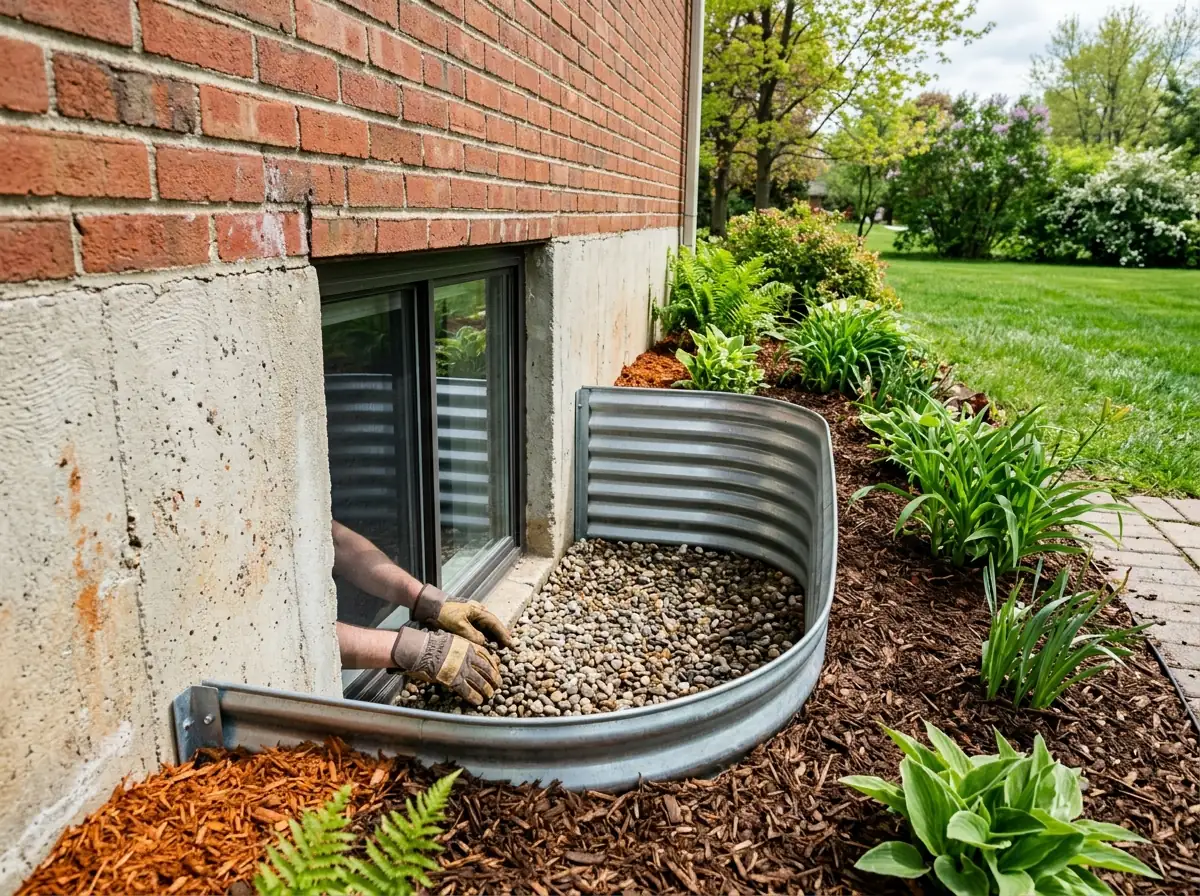
The corrugated galvanized steel well is the familiar half-round shape you see beside most basement windows. It's fastened to the foundation wall and backfilled around the outside. HomeAdvisor puts steel wells at $800 to $1,800 nationally and calls them strong and durable.
When an old steel well rusts through at the bottom or bends inward under soil pressure, it can be swapped without touching the window. That's a simple replacement job. If the window behind it is also a rusted steel basement frame, it's worth pricing both together; see basement window replacement.
Plastic, Fiberglass and Concrete Wells
Molded plastic wells are the cheapest at $700 to $1,000 in HomeAdvisor's national data, lightweight and easy to install, though it notes they may not last as long. Fiberglass wells, at $1,000 to $2,200, resist rust and corrosion. Custom poured concrete runs $1,500 to $2,800 and is the most durable, and it can be shaped to suit the house.
Some molded egress wells have steps built in, and the code accepts steps as well as a ladder for a deep well. For a finished basement bedroom, we like a lighter-colored liner: it bounces more daylight into the room than gray galvanized steel. That's a matter of taste, not code.
Window Well Covers
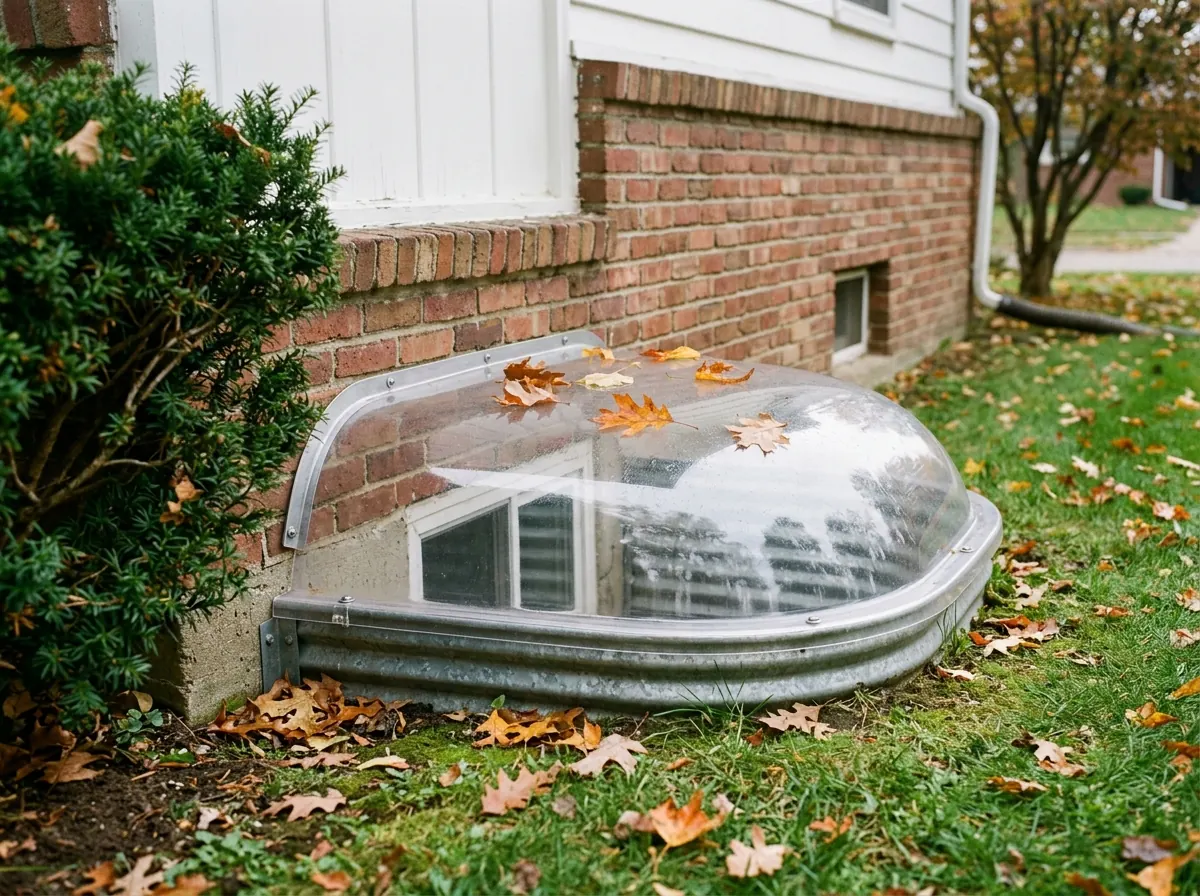
Covers keep out leaves, snow, rain and animals, and keep people from stepping into the well. HomeAdvisor lists plastic covers at $70 to $200, polycarbonate at $200 to $300 and metal grates at $300 to $700, all national figures.
On an escape-window well, the code adds a rule that matters more than the price. Bars, grilles, covers and screens are allowed, but they must be releasable or removable from the inside without a key, a tool, special knowledge or more force than it takes to open the window. A heavy steel grate bolted down for security fails that test. Ask the installer to show you how the cover opens from inside the well before you pay for it. Clear polycarbonate also lets light through, which a solid cover doesn't.
Window Well Drains
Michigan's residential code requires window wells serving escape openings to drain, by connecting to the foundation drainage system or an approved alternative. A well isn't required to have a drain where the foundation sits on well-drained sand or gravel soils.
HomeAdvisor notes that tying the well into a French drain or sump system keeps water from pooling and leaking into the basement. If your basement window leaks every spring, look at the well before you blame the window. Standing water after a storm points at the drain, and our window leak repair page covers the rest.
Ladders and Steps
A well deeper than 44 inches needs a permanently attached ladder or steps that can be used with the window fully open. The code sets the details: rungs at least 12 inches wide inside, projecting at least 3 inches from the wall, and spaced no more than 18 inches apart for the full depth of the well. The ladder or steps may encroach up to 6 inches into the well's required size.
That last allowance is easy to get wrong. A ladder that sticks out further, or a well that's tight to start with, can leave too little room to climb out. Ask for the well's inside dimensions on the quote.
Why Troy homeowners call Troy Windows
- Free in-home measure of every opening
- Written, itemized quote before any work
- Frames and sills checked before a price
- One local window installer, not a call list
- No charge to homeowners for the referral
Window Well Size Rules for Escape Windows
If the well serves a bedroom or basement escape window, the residential code sets its size: a horizontal area of at least 9 square feet, at least 36 inches out from the wall and 36 inches wide, and big enough to let the window open all the way. The opening size of the window itself, its sill height and when one is required are covered on our egress window installation page.
A well for a basement window that isn't an escape opening falls outside those size rules. It still needs a way to shed water, and a drain is the reliable one.
Window Well Replacement Cost in Troy
HomeAdvisor's national data, updated June 2026, gives these ranges for the well itself:
| Well material | National range |
|---|---|
| Plastic | $700 to $1,000 |
| Steel | $800 to $1,800 |
| Fiberglass | $1,000 to $2,200 |
| Concrete (custom) | $1,500 to $2,800 |
| Cover | $70 to $700 |
Labor averages $900 to $1,500 on most projects. The same page gives other totals elsewhere, so treat the ranges as a guide and get a written quote. HomeAdvisor says most municipalities require a permit for a window well or egress window, with fees of $50 to $300. Ask whether the permit is in the quote.