
Safety and Privacy Glass Types
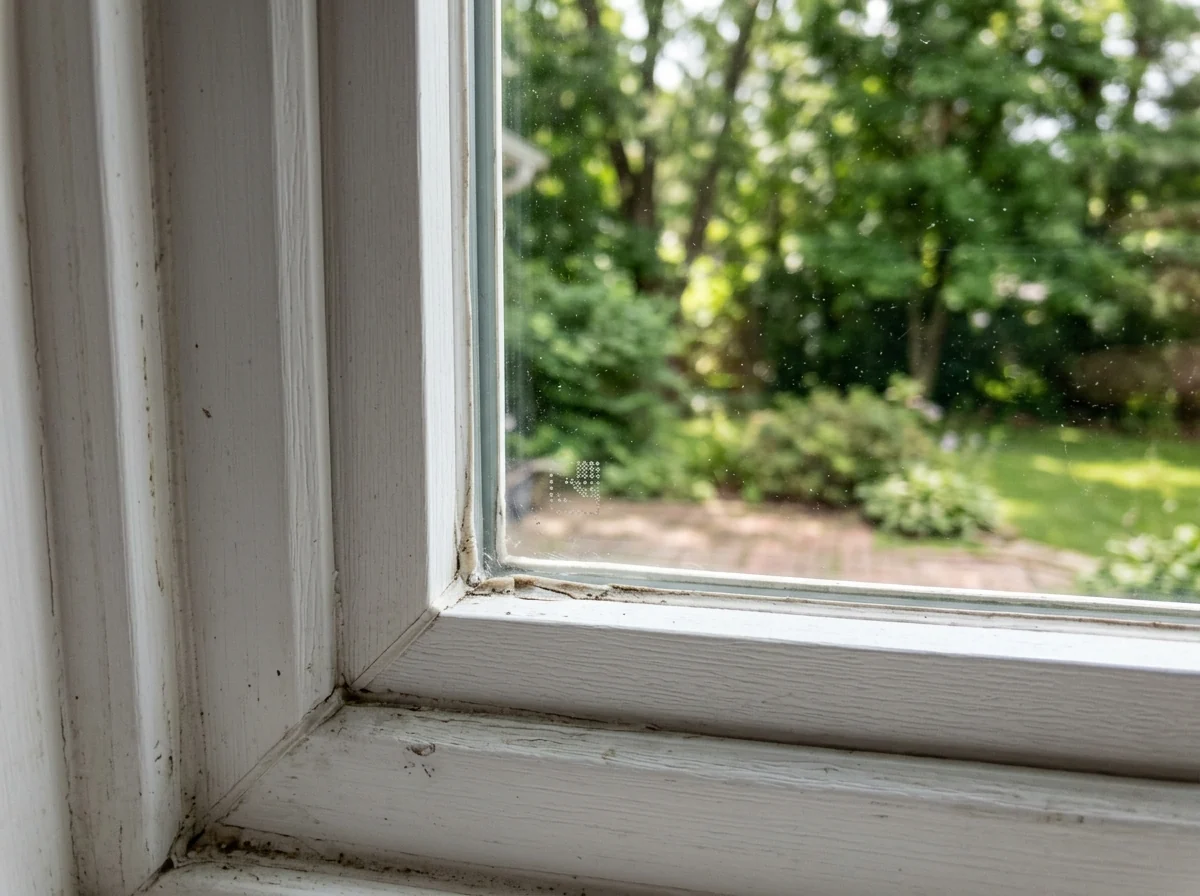
Tempered Safety Glass
Tempered glass is ordinary glass heated past 600°C and then blasted with air, so the surface cools first and locks into compression. It's about four times stronger than annealed glass, and when it does break it falls into small, relatively harmless pieces instead of long shards.
Two practical points. Tempered glass can't be cut, so the pane is made to the exact size before tempering. A measuring error means a new pane, not a trim. And every tempered pane in a hazardous location must carry a permanent manufacturer's mark (acid etched, sandblasted, ceramic-fired, laser etched or embossed) that's still visible once the window is installed. Tempered glass gets no exception. In an older house, an unmarked pane beside a door is the first thing worth asking about.
Laminated Glass
Laminated glass is two or more panes bonded by a thin plastic interlayer. When it breaks, the interlayer holds the pieces in place in a spider-web crack instead of letting them fall. That makes it the safety glass to choose where falling glass is the risk: a large pane over a stair, or a window someone could fall against.
It also cuts noise noticeably better than a single pane of the same thickness, so laminated glass doubles as the quiet option. See soundproof windows.
Obscure and Privacy Glass
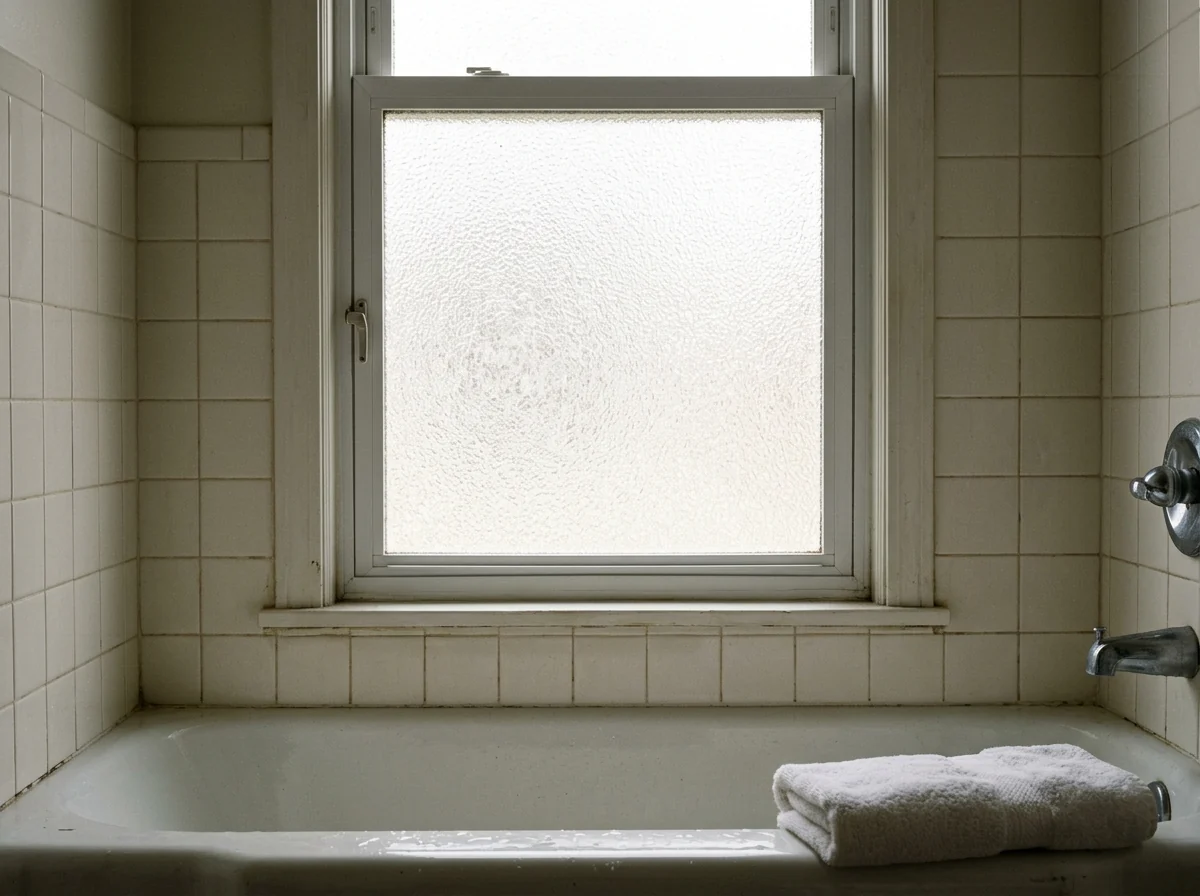
Obscure glass lets light in and blurs the view: frosted or etched glass with an even satin finish, or textured glass pressed with a pattern (often sold as rain, reed or glue chip).
Privacy and safety are separate questions. A frosted pane in a hazardous location still has to be tempered or laminated. Ask for both on the quote: the pattern you picked and the safety rating. Pattern names vary by maker, so look at a real sample in daylight before you order.
Bathroom and Stairway Windows
Both are easy to miss when the old window looks fine.
Bathrooms. Glass in walls around a tub, shower, hot tub or sauna is a hazardous location when its bottom edge is less than 60 inches above the standing surface. If your bathroom window sits over the tub and starts below that line, it needs safety glass, and you'll probably want a privacy pattern on it too.
Stairways. Glass beside a stairway, a landing between flights or a ramp counts when its bottom edge is less than 36 inches above the walking surface. It's exempt if a rail at 34 to 38 inches guards it, or if it's at least 36 inches away horizontally. Glass near the bottom landing counts too: under 36 inches above the landing and within a 60-inch arc of the bottom tread. In a split-level, check any window beside the half-flights.
Why Troy homeowners call Troy Windows
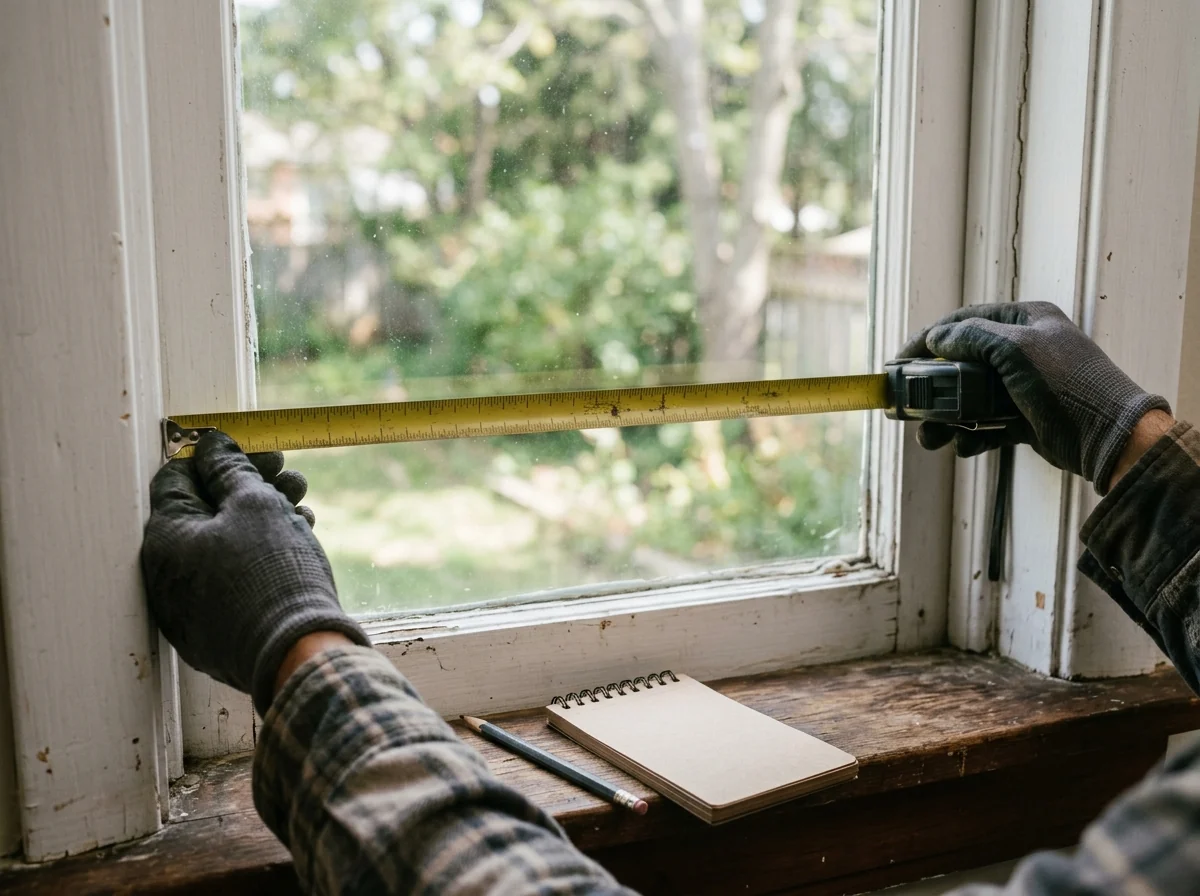
- Free in-home measure of every opening
- Written, itemized quote before any work
- Frames and sills checked before a price
- One local window installer, not a call list
- No charge to homeowners for the referral
Where a Troy Home Needs Safety Glass
Michigan's residential code is based on the 2015 International Residential Code, which lists the hazardous locations. Beyond bathrooms and stairs:
Doors
All glass in swinging, sliding and bifold doors, fixed and operable panels alike. Patio-type sliding doors take the tougher Category II rating at any size.Beside doors
Glass within 24 inches of either side of a closed door, with its bottom edge under 60 inches. In-swinging doors add a rule for side-wall glass near the hinge; French patio doors explains it.Big, low panes
A single pane counts when all four conditions apply: over 9 square feet, bottom edge under 18 inches from the floor, top edge over 36 inches, and a walking surface within 36 inches. Think of a large picture window that runs close to the floor.Replacements
Ask that every new window or pane in one of these spots meet the rule, whatever the old glass was.
The safety mark also tells you which test the glass passed. The main standard is the federal impact test, CPSC 16 CFR 1201, in Category I or the tougher Category II. Glass that isn't in a door or a tub or shower enclosure may instead be tested to ANSI Z97.1, Class A. A pane in a door should say 16 CFR 1201. If the mark only names Z97.1, that pane belongs in a window, not in a door or a tub enclosure.
Tempered and Privacy Glass Cost
National figures from HomeGuide's window glass replacement guide (February 2026):
| Glass | National cost per window |
|---|---|
| Tempered | $300 to $750 |
| Laminated | $300 to $750 |
| Frosted (privacy) | $300 to $800 |
| Tempering upgrade on a large pane | adds $100 to $300 |
Window size, style and glass type move the price most. If you're only replacing broken glass, see window glass replacement.