
Picture Window Types and Combinations
Because a picture window doesn't open, it can be made larger than any operable window, and it has no moving seal to wear out or leak air. The trade-off is ventilation, which is why most picture windows have company.
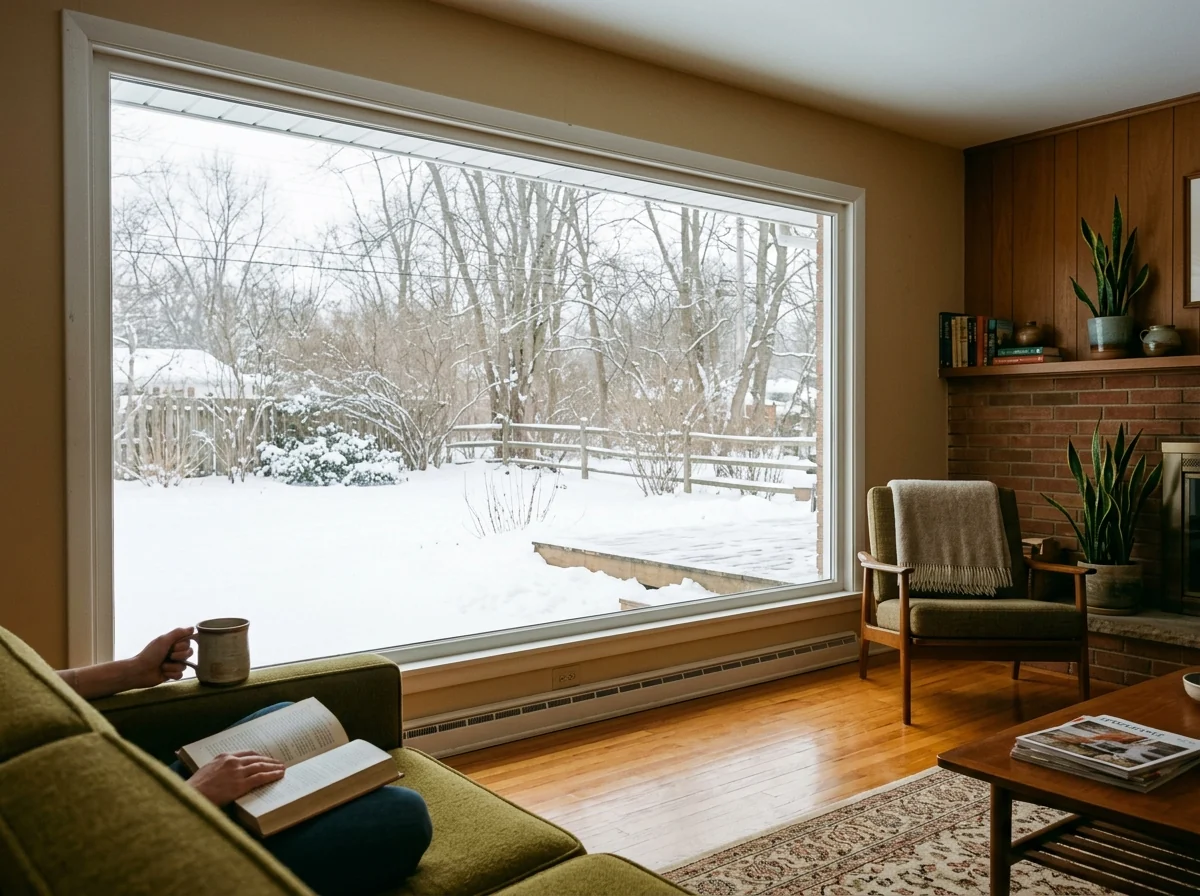
Large Single-Lite Picture Windows
A single big pane is the simplest window you can buy. The cost comes almost entirely from glass area and frame material, because there's no operator, lock or balance to build. Fixed windows have fewer places for air to leak, so a large picture window with a good low-e package is usually one of the tightest openings in the house.
Watch the outside glass, though. A fixed pane can only be cleaned from outside, so a big one on a second floor means a ladder every time. We'd put the largest fixed panes on the ground floor where you can reach them.
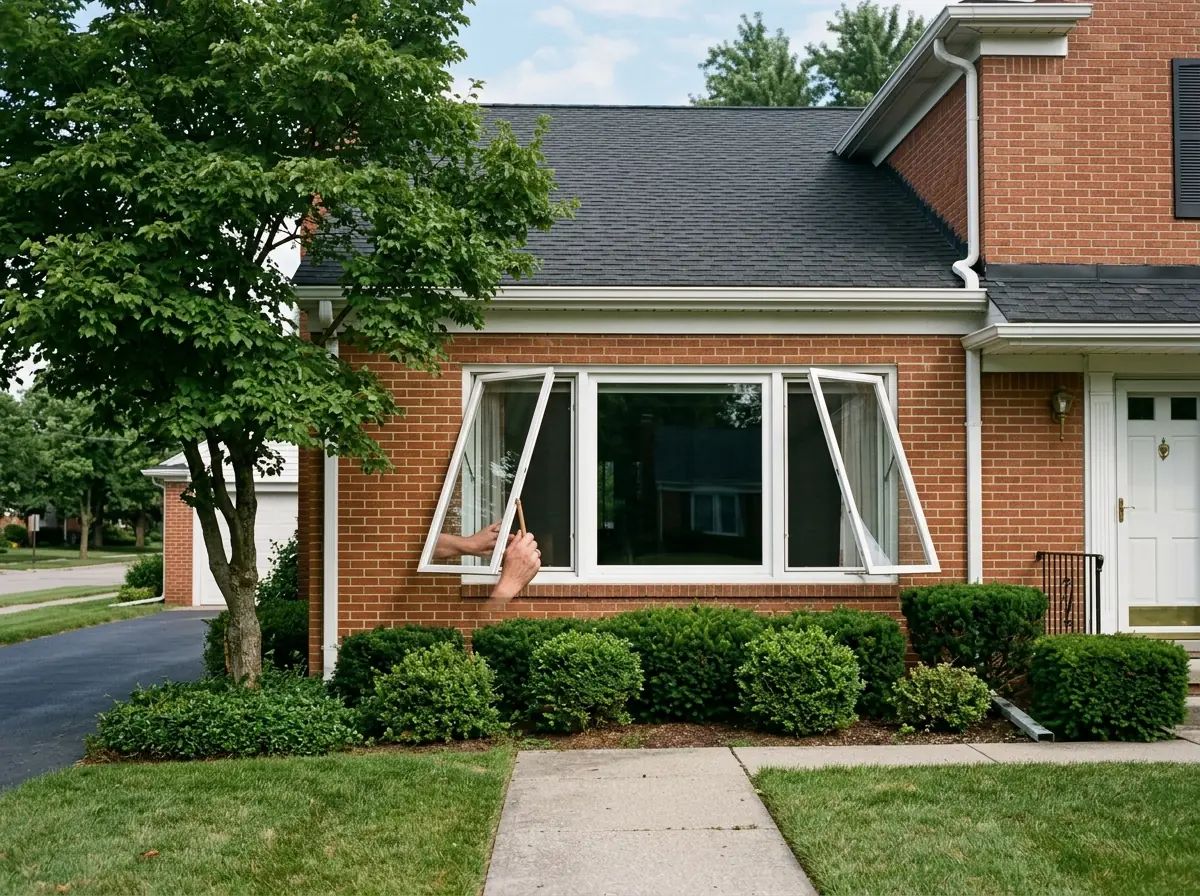
Picture Windows Flanked by Casements or Double-Hungs
The classic living-room combination is a big center pane with an operable window on each side: casements for a modern look and the most air, double-hungs to match a colonial. The side units are factory-joined to the center pane, so the frame reads as one window and one opening gets flashed. Ask for the full combination as a single line on the quote. See casement windows and double-hung windows for the flankers.
Picture Window with a Transom Above
A shorter fixed pane or an arched piece above the main window adds light high in the room without making the main pane taller and heavier. A rectangular transom matches a ranch; a half-round suits a colonial or a two-story foyer. Shaped transoms are their own job, so see specialty shape windows.
Stacked and Joined Picture Units
Several picture windows can be joined without wall framing between them, building a wall of glass from standard-size units. Another option is an awning window joined below or above a picture pane, so the room gets air without a sash cutting the view.
Why Troy homeowners call Troy Windows
- Free in-home measure of every opening
- Written, itemized quote before any work
- Frames and sills checked before a price
- One local window installer, not a call list
- No charge to homeowners for the referral
Picture Window Replacement Cost in Troy
Two national cost guides; neither breaks out Michigan.
| Source | Picture window, installed | Data year |
|---|---|---|
| HomeGuide (window cost guide) | $300 to $1,300 per window | 2026 |
| HomeGuide (picture window guide) | $20 to $50 per square foot | 2025 |
| Fixr | $300 to $1,600 per window | 2026 |
By HomeGuide's per-foot figure, a 48 by 60 inch window (20 square feet) comes to about $400 to $1,000, and a 96 by 72 inch one (48 square feet) about $960 to $2,400. Frame material matters too: HomeGuide's picture-window ranges run $200 to $900 for vinyl, $550 to $1,600 for fiberglass and $600 to $2,000 for wood. Arched, round or custom shapes cost more than a plain rectangle. Combinations are priced per unit plus the joining. HomeGuide puts the labor at $100 to $500 per picture window, and high or second-story units that need scaffolding cost more to install. If the opening projects out from the wall instead of sitting flat, you're pricing a bay rather than a picture window; see bay and bow windows.
Picture Windows in Troy: Safety Glass and Sun
When a Picture Window Needs Safety Glass
A large pane near the floor is where people walk into glass, which is why the code singles it out (the four conditions are in the question below). A picture window set right beside a doorwall can also fall under the rule for glass next to doors. The tempered glass windows page lists every location and the safety marks to look for.
Energy and Solar Heat
A big pane brings in a lot of sun. In a cold climate, DOE advises the lowest U-factor you can afford on north windows and a higher solar heat gain (SHGC) with a low U-factor on south-facing ones. A west-facing picture window that overheats the family room in July may want a lower SHGC instead; tell the installer which way each one faces. For the U-factor every window here has to meet, see energy efficient windows.