
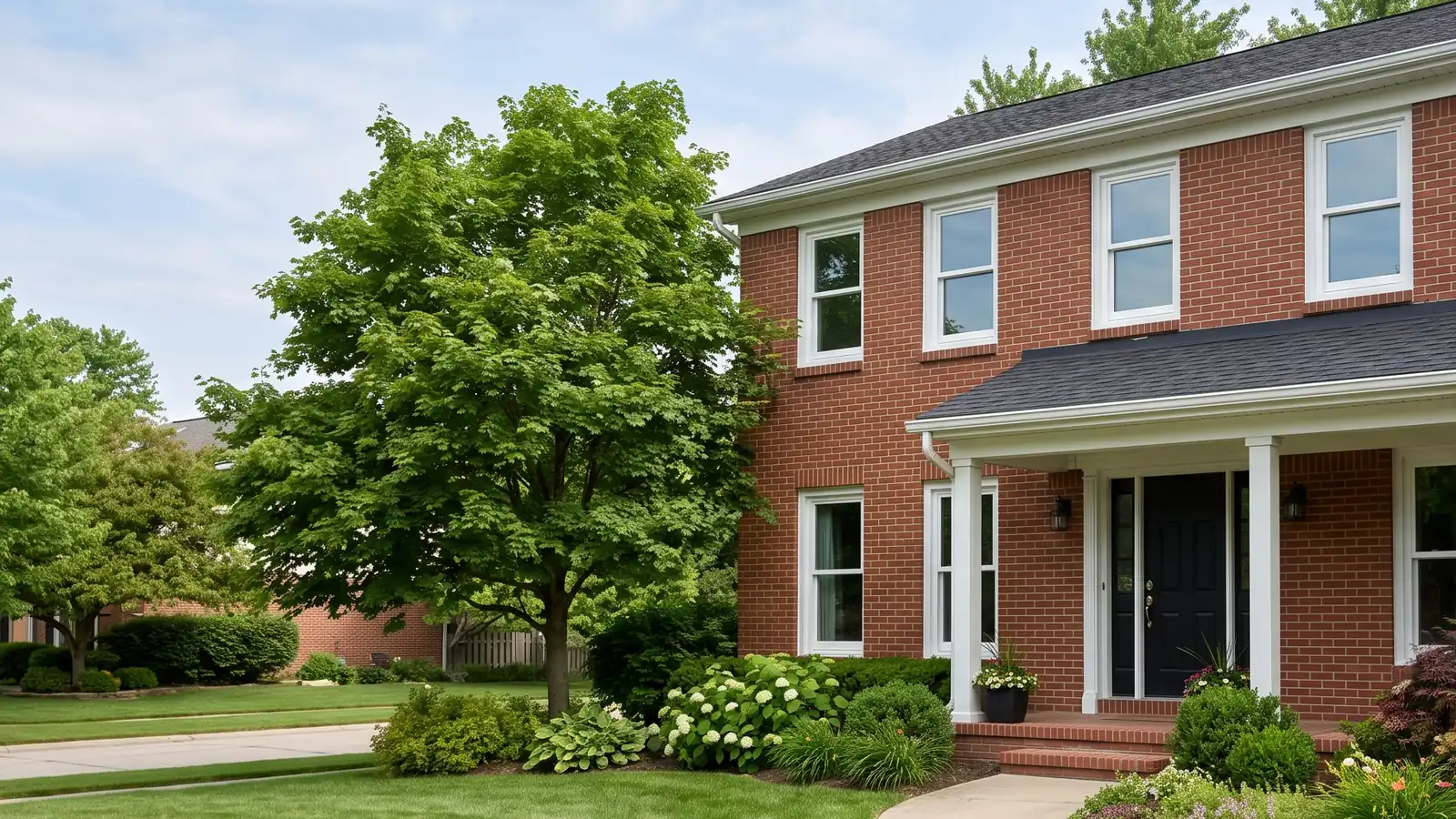
Energy Efficient Window Options in Troy
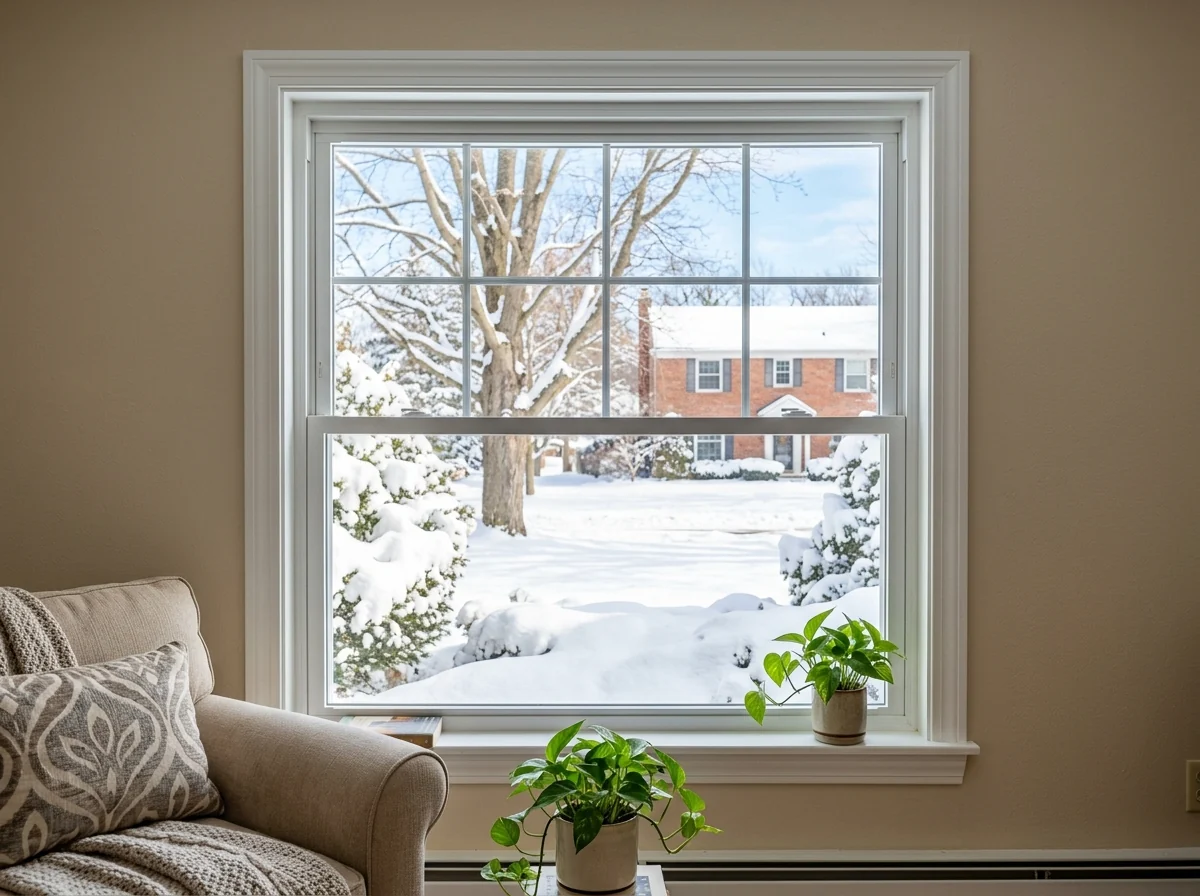
ENERGY STAR Northern-Zone Windows
ENERGY STAR splits the country into zones, and Troy sits in the Northern one. The current criteria, Version 7.0, took effect on October 23, 2023. A Northern-zone window has to reach 0.22 or below on U-factor, paired with an SHGC no lower than 0.17. There's also an equivalent-performance path: a U-factor of 0.23 or 0.24 with an SHGC of 0.35 or more, or 0.25 or 0.26 with 0.40 or more. Air leakage has to be 0.3 cfm per square foot or less.
That's tighter than code. The legal limit is looser: in Oakland County's zone 5A, Michigan's energy code lets a window go as high as 0.32. A window can pass inspection and still be well short of ENERGY STAR, so ask which one the quote is pricing. If you're coming from single-pane glass, ENERGY STAR puts the average bill saving from certified units at up to 13% nationwide.
U-Factor and SHGC on the NFRC Label
U-factor measures how well the whole window insulates, frame and spacers included. Windows usually rate between 0.20 and 1.20, and lower is better. SHGC runs from 0 to 1 and measures how much of the sun's heat gets through. Visible transmittance (VT) tells you how much daylight you keep; most double- and triple-pane units rate 0.30 to 0.70.
For a cold climate, DOE's advice is simple: on north walls, buy the lowest U-factor you can afford. On south walls, look for the lowest U-factor with the highest SHGC you can get, so winter sun does some of the heating. We'd add one practical point: keep the NFRC stickers on until the walkthrough. DTE's $15-per-window rebate asks for the U-factor and SHGC stickers, and it applies only when DTE is your main heating provider.
Double-Pane Insulated Glass
By DOE's figure, a second pane alone more than halves heat loss against single glass. The gap between the panes is the insulation, and argon in that gap does better than air. Clear double-pane alone isn't enough anymore, though. In DOE's generic window set, clear double glass in a nonmetal frame rates a U-factor of 0.52. Add low-E, argon and an improved frame and the same double-pane unit drops to 0.27 to 0.29. A clear unit at 0.52 can't meet Michigan's 0.32 cap, so low-E and gas are now the baseline, not the upgrade.
The coating is the biggest single step, and it has its own page: see low-E glass.
Warm-Edge Spacers
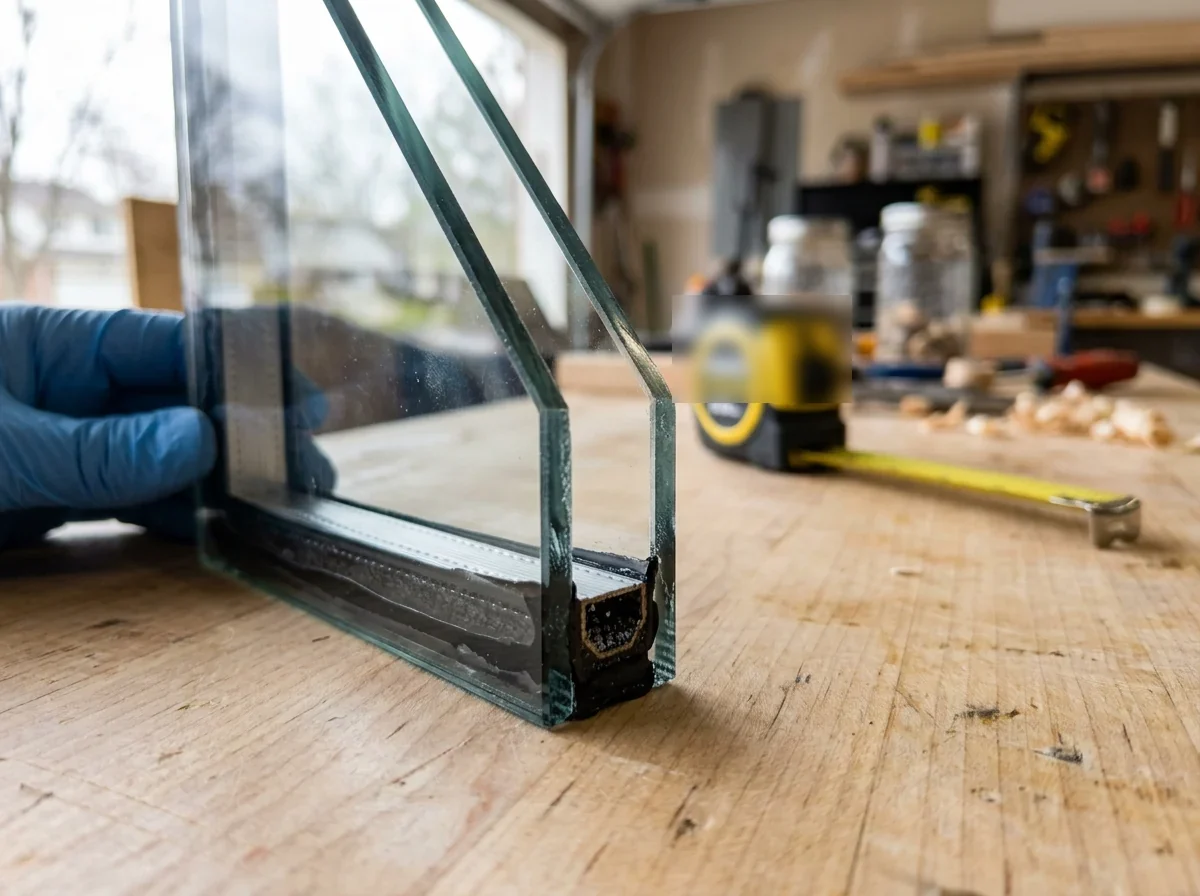
The spacer is the strip that holds the two panes apart at the edge. Old units used aluminum, which DOE calls a thermal "short circuit" at the edge of the glass. Warm-edge spacers use stainless steel, foam or thermoplastic instead, and DOE says they're now in more than 90% of new windows.
On a typical 3-by-4-foot window, a good warm-edge spacer improves the whole-window U-factor by about 0.02. The bigger gain is comfort. At 0°F outside, it can make the bottom edge of the glass 6 to 8°F warmer, and the bottom edge is where condensation and frost start. If your current windows grow a line of ice along the bottom of the glass in January, the spacer is part of the reason.
Frame Insulation and Air Leakage
The frame is a fair share of the window's area. In DOE's set, putting that same clear double glass in a metal frame instead pushes it from 0.52 to 0.83. Vinyl and wood insulate about equally, and fiberglass has insulating cavities as well. Our material pages cover the trade-offs: vinyl replacement windows, fiberglass and wood.
Air leakage is the label's last number. DOE's guidance is 0.30 cfm per square foot or less, the same line ENERGY STAR uses. Compare it for the exact style you're buying, not the series brochure.
Want more than double-pane? Triple glazing adds a third pane and a second gas space; see triple pane windows.
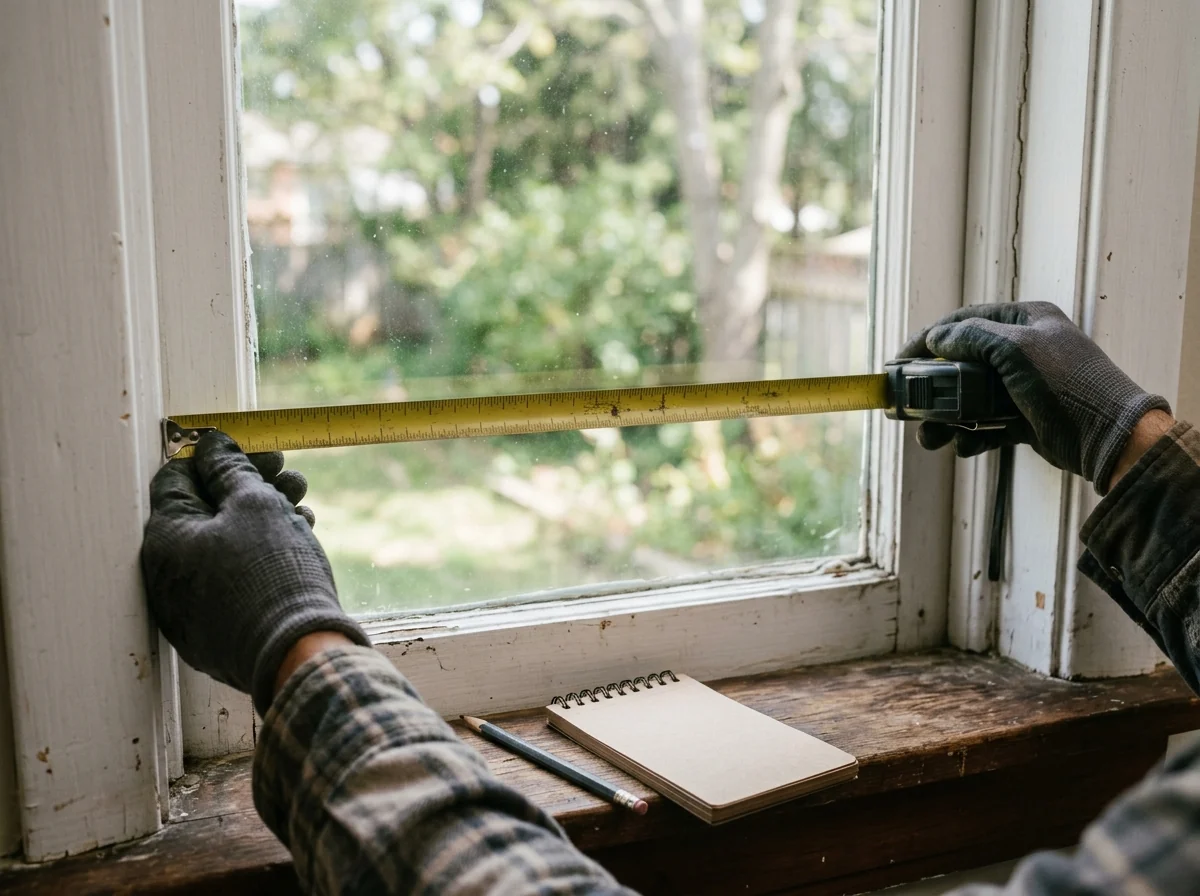
Why Troy homeowners call Troy Windows
- Free in-home measure of every opening
- Written, itemized quote before any work
- Frames and sills checked before a price
- One local window installer, not a call list
- No charge to homeowners for the referral
Energy Efficient Window Cost and Payback
DOE's 2012 measure guideline put clear double-pane replacement windows in nonmetal frames at about $24 per square foot of window and double low-E at about $29; the triple-pane figure is on the triple pane windows page. Those are old national figures, useful for the gap between them rather than as a quote. For current national per-window prices by frame material, see the cost section on our homepage.
Savings depend on what you're replacing. In DOE's cold-climate model, swapping clear double-pane for double low-E argon saved a 2,000-square-foot house about $144 to $150 a year at 2010 energy prices. Going from single-pane saves more, which is why ENERGY STAR's "up to 13%" figure is pinned to single-pane replacements.
Heat loss share
Windows account for 25% to 30% of the energy a home uses for heating and cooling, through heat gain and loss, by DOE's estimate.No federal credit
The 25C credit ended with 2025, so a window placed in service this year gets nothing from it.Installation counts
DOE warns that even the most efficient windows can leave a drafty house and condensation if they're installed poorly.
Energy Efficient Windows for Troy Homes
A lot of Troy's houses date from the 1970s, so original windows here are approaching 50 years old. The nearest NOAA station, at the Oakland County airport, records about 6,680 heating degree days in a normal year, which is why U-factor matters more here than SHGC on most walls. Our advice: spend on U-factor for north and east rooms, keep a higher SHGC on big south-facing glass, and make sure every unit in the quote carries its NFRC label.